Rainwater Harvesting
|
|
|
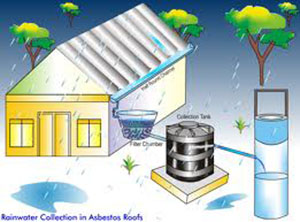
Rainwater harvesting the accumulation and deposition of rainwater for reuse before it reaches the aquifer.
Uses include water for garden, water for livestock, water for irrigation, and indoor heating for houses etc..
In many places the water collected is just redirected to a deep pit with percolation. The harvested water can
be used as drinking water as well as for storage and other purpose like irrigation and future needs.
|
|
Borewell
|
|
|
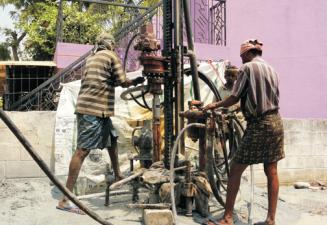
A bore well is a well of 4 1/2", to 12" in diameter drilled into the earth for retrieving water.
In this 4 1/2" and 5 1/2" Bore wells are commonly for Domestic purposes while 6 1/2" and more are for
Commercial / Industrial purposes. A bore well is cased in the region of loose subsoil strata open in
hard rock or in crystalline rock. High grade PVC pipes are used for Casing in bore wells.
The depth of a bore well can vary from 150 feet to 1500 feet.
|
|
Ringwell
|
|
|
A ring well is constructed by excavating a shaft, generally manually and installing a casing where needed.
Dug wells are used extensively for domestic water supplies. They are generally not very deep because these
cannot readily be sunk far enough below the water table. Most of these are less than 50 feet deep.
They generally yield only small supplies of water from water-bearing materials of rather low
permeability near the top of the zone of saturation.
|

|
Plumbing
|
|
|
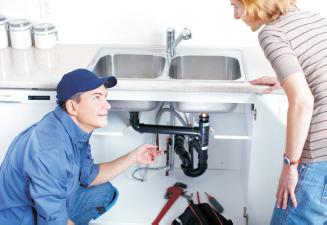
A Plumbing is the system of pipes, drains fittings, valves, valve assemblies, and devices
installed in a building for the distribution of water for drinking, heating and washing,
and the removal of waterborne wastes, and the skilled trade of working with pipes, tubing
and plumbing fixtures in such systems. A plumber is someone who installs or repairs piping systems,
plumbing fixtures and equipment such as water heaters and backflow preventers backflow preventers.
Thus, plumbing usually deals with laying of pipe lines which provide a means of transportation for fluids.
The plumbing industry is a basic and substantial part of every developed economy due to the need for clean water,
and sanitary collection and transport of fluids.
|
|
Landscaping & Gardening Work
|
|
|
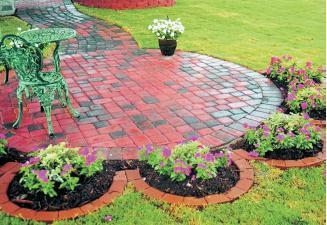
Landscaping is about visualizing a picture for a space and then creating that space.
Landscaping incorporates into the space botanical elements, such as trees, lawns and shrubbery and other flora,
along with hardscapes, such as pathways, furniture, planting beds, water features and fences. Gardening involves
design, planning and maintenance, but gardening usually involves only the plants in a space. Landscape designers
and gardeners can sketch a design for a garden and determine a plant list, but only the gardeners will plant, weed,
cultivate, replace and harvest the plants. Gardening is an ongoing activity because gardens require tending and specialized
care throughout the year. Gardening also requires knowledge, from experience and education, of several natural processes,
including soil ecology, climates, plant physiology, water drainage and pest infestations.
|
|
Ozonation
|
|
|
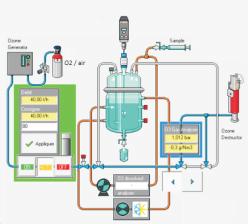
Ozonation is one of the method to convert impure water into to pure drinking water, ozone inactivares and destroys all bacteria,
virus and protozoa's. Ozone will oxidise both organic and inorganic substances, remove unwanted taste, odour and color, and provide effective disinfection.
|
|
Waste Water Treatment Plant
|
|
|
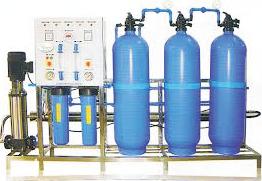
Wastewater treatment protects the environment and public health. Wastewater contains pollutants
and microorganisms that are harmful to humans and wildlife. Wastewater Treatment Plant uses primary
and secondary treatment methods to remove pollutants, and then releases the cleaned water into the Environment.
|
|
Sewage Treatment
|
|
|
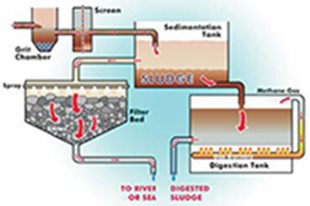
Sewage Treatment is the process of removing contaminants from wastewater household sewage, both runoff(effluents),
domestic, commercial and institutional. It includes physical, chemical, and biological processes to remove physical,
chemical and biological contaminants. Its objective is to produce an environmentally safe fluid waste stream
(or treated effluent) and a solid waste (or treated sludge) suitable for disposal or reuse (usually as farm fertilizer).
Using advanced technology it is now possible to re-use sewage effluent for drinking water.
|
|
 (+91)-9643318692
 (+91)-9930383083
 hallmarkhydro@gmail.com
